By Brett Goodman and Omer Novoselsky • July 2, 2026
Jerusalem, 2 July, 2026 (TPS-IL) — It took less than an hour on Wednesday morning for two more names to be added to the rising toll of crime-related violence in Arab communities in Israel. In a parking lot in the northern town of Shefa-Amr, 24-year-old bus driver Ali Sawaed was shot at close range moments after greeting his father, who works there as a security guard.
Not far away in the village of Yagur, near Haifa, a 21-year-old man from Basmat Tab’un was gunned down in his car outside a shopping center, hit by dozens of rounds at point-blank range.
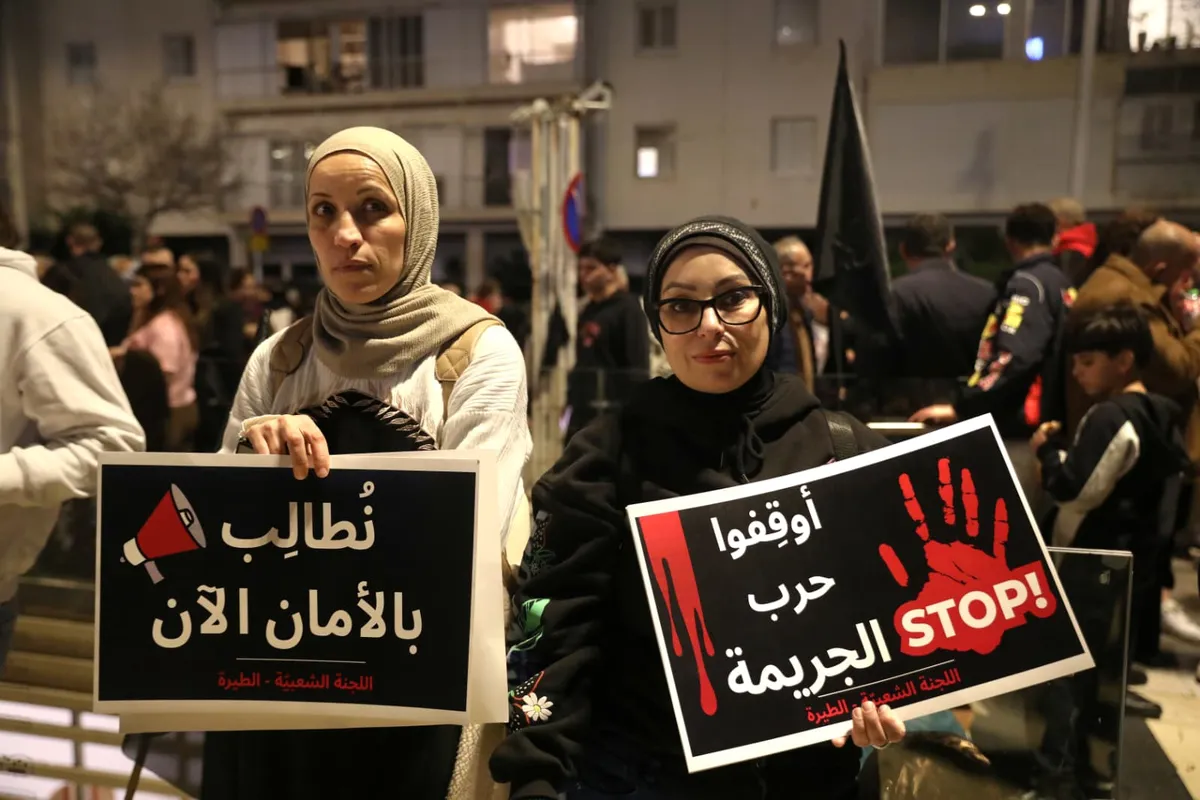
These killings are part of a rapidly escalating wave of violence across Arab communities in Israel. On Monday, a 30-year-old man was shot dead in his car in Yafia, near Nazareth, the sixth fatality within just over 24 hours. A day later in Kiryat Haim, near Haifa, a car bomb killed Rabee Abu Haikal, 50, in what police described as a suspected organized crime hit, bringing the three-day toll to seven.
According to the Abraham Initiatives, an Israeli civil society organization that promotes Jewish-Arab equality and coexistence, at least 143 people from Arab communities have been killed this year. This already exceeds the same period in 2025, which ended with a record 252 deaths.
‘Fear Accompanies Us All the Time’
“I no longer feel safe letting my children go outside,” Miyada Alush of Akko told The Press Service of Israel. “When my son asks to ride his bike, I immediately fear something might happen. It is a feeling of fear that accompanies us all the time.”
Alush described a recent shooting in her own apartment building.
“People came to the building where I live and shot at one of the floors. It shocked us all. We are normal families, working and educated people, who have nothing to do with violence or crime, and yet the violence reached our doorstep,” Alush recalled.
“Also on the street where I live, a young man was murdered about a year and a half ago on his way to start his studies in Germany. He was shot right where I park my car. Since then, it has been difficult for me to free myself from the feeling of anxiety,” she said. “Even a small argument about parking could, from our perspective, end in disaster because of the availability of weapons and the violence that has become part of reality. This is not only a violation of personal security, but a violation of the entire quality of life.”
The surging violence is widely attributed by authorities and analysts to organized crime groups engaged in turf wars and efforts to eliminate rivals. These networks are reported to be involved in extortion, money laundering, and the trafficking of weapons, drugs, and women.
Alush noted that fear is driving migration. “I know people who left their towns to live in Jewish cities, just because it feels safer there.”
In September 2023, TPS-IL reported a surge in Arab migration to Jewish neighborhoods to escape rising violence. TPS-IL found that a lack of infrastructure for shared living between Arab and Jewish residents in certain neighborhoods could risk exacerbating social tensions.
Some critics, including community activists and public figures, argue that the crime wave has worsened since Itamar Ben-Gvir, a far-right politician, became National Security Minister in 2022. Others attribute the trend to long-standing systemic enforcement gaps and entrenched criminal networks.
The Israel Police did not respond to TPS-IL requests for comment.
“The state is abandoning us,” Alush said, arguing that criminals have become emboldened by what she describes as insufficient enforcement. “Our lives do not receive the same level of protection that every citizen deserves.”