


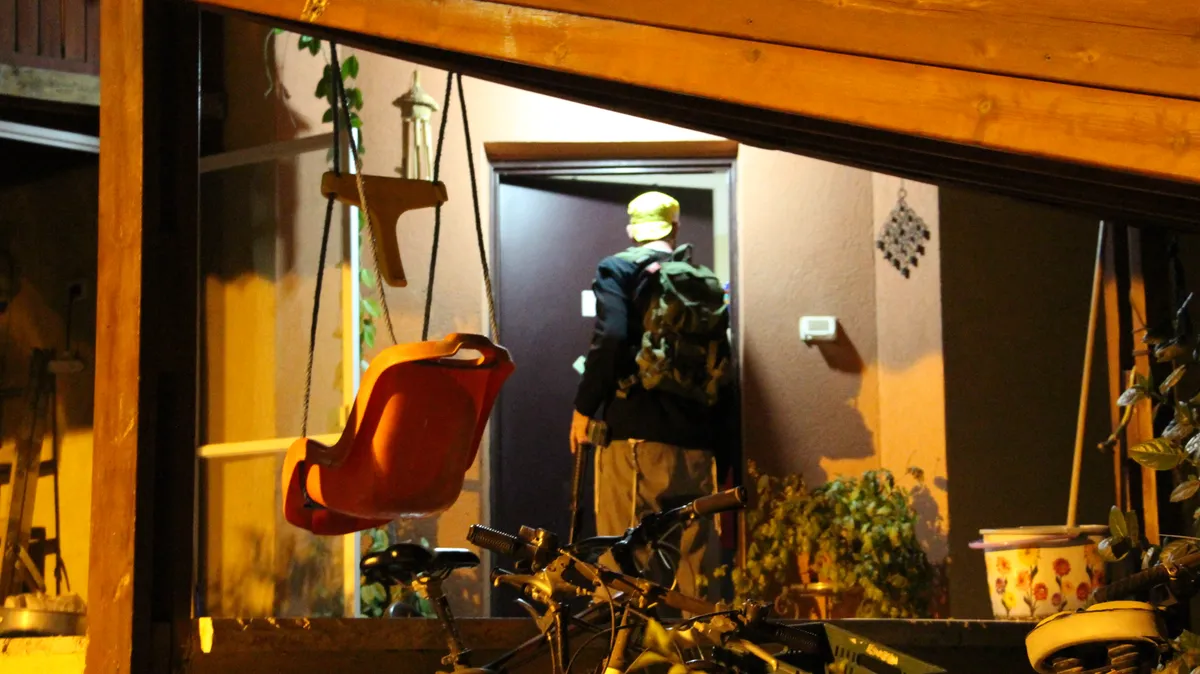
Jerusalem, 30 June, 2026 (TPS-IL) — On June 22, 2026, two Palestinians approached Karmei Tzur, a Jewish village in the West Bank south of Jerusalem. According to the IDF, the pair were shot and killed after “throwing Molotov cocktails” towards homes. The armed individuals killed were brothers, ages 15 and 19.
To the Israeli Army, being teenagers did not negate their designation as terrorists. To the international media, however, it was another example of Israel killing Palestinian children.
“Israeli soldiers shoot dead two Palestinian teens in West Bank” was the headline from Reuters, while the Spanish daily Democrata led with “Palestinian minor and young man die from Israeli army gunfire near a settlement in Hebron.”
“They’re not going to point out the fact that they were trying to murder Israelis and they were killed in the act,” Itamar Marcus, the founder of Palestinian Media Watch, told TPS. “This is the kind of item that will end up in the ‘Betzlem’ and UN reports as if we killed the child and not a terrorist.”
The alleged Karmei Tzur attack further underscored and revealed how the complicated and complex nature of war can be simplified into disparaging narratives in the Middle East, especially around the death of children.
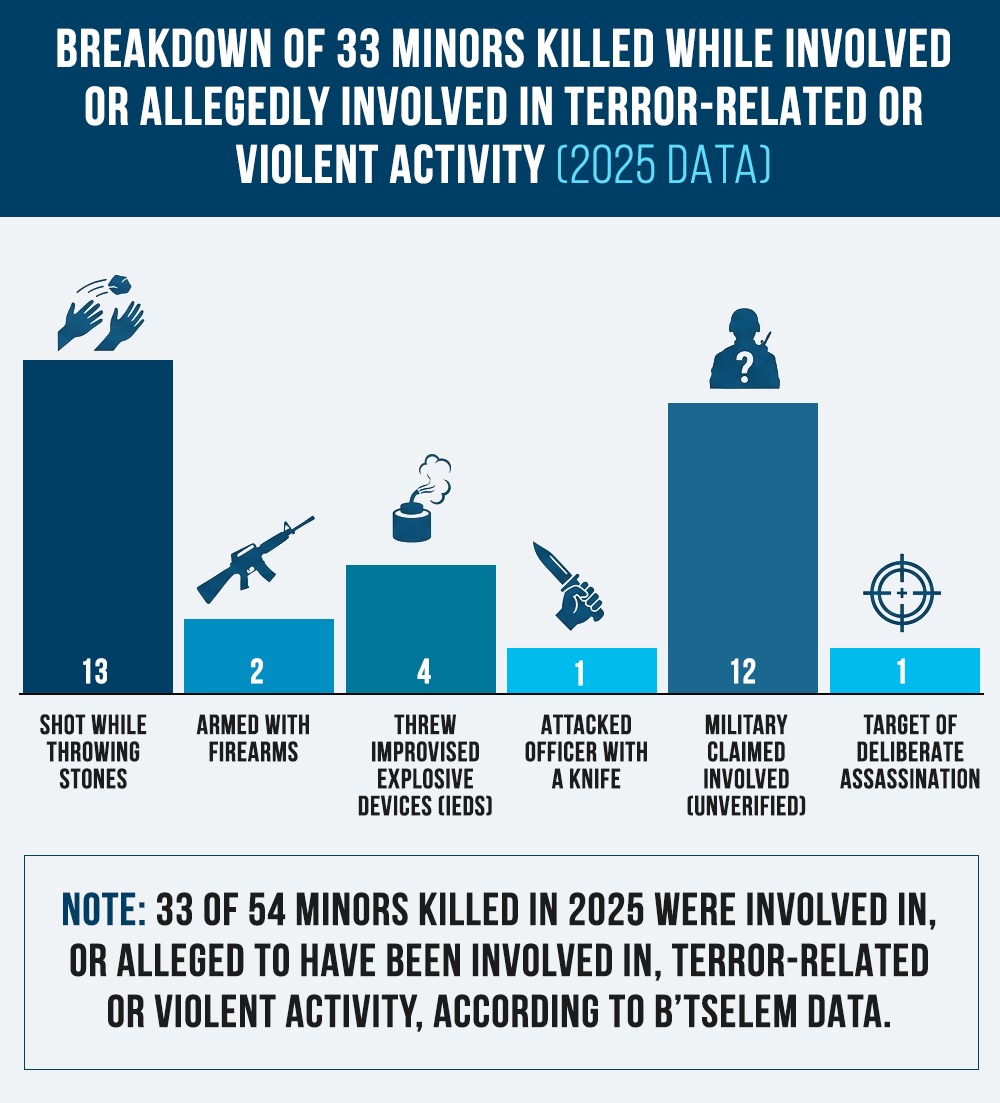
The incident, moreover, happened just days after a United Nations commission published a report blasting what it called “Israel’s deliberate targeting of Palestinian children in the Occupied Palestinian Territory” since October 7th. Critics blasted the report for framing minors primarily as victims, without giving sufficient weight to cases in which teenagers were involved in attacks, attempted attacks, or other terrorist activity.
The Missing Context Behind the Numbers
Asked by TPS whether the Commission’s data on minors distinguishes between children involved in terrorist activity or attacks and those who were not, the Commission said that in all the incidents examined in its latest report, “none of the children were in any way involved in violent or suspicious activities.” B’Tselem did not respond to a TPS request for comment by publication time.
Middle East analyst Alex Greenberg said that while he has not seen a specific current campaign focused on recruiting children, the broader culture around martyrdom leaves room for young people to be drawn into violence.
“Even before October 7th, when [Palestinians] would put on their theatrical spectacles, you would often see children participating and holding Kalachnikovs,” Greenberg noted. “There may not be specific incitement of children to become shahidim, but they do always eulogize and prize martyrs no matter who and what they are. They have no qualms about recruiting youngsters.”
According to Greenberg, the atmosphere in Gaza, Judea and Samaria, is shaped by an education system and public discourse that glorify terrorism and martyrdom.
“The ONLY education that exists in Gaza and Judea and Samaria is this Islamist education that supports terrorism, celebrates terrorism, eulogizes martyrs irrespective of what they have done, whether they murdered civilians or soldiers,” he said.
When the Attacker Is a Minor
For Israelis who have lived through such attacks, the fact that the assailant was a minor does not change the nature of the act. In 2016, 17-year-old Muhammed Tarayrah stabbed and killed 13-year-old Hallel Yaffa Ariel in Kiryat Arba while she was asleep.
“He was a terrorist in every sense, despite and in addition to his young age,” Shukii Gilboa, who was injured in the attack, told TPS. “He really planned the attack, planned his route of arrival, planned the time, really planned which house, which window he was going to.”
Gilboa said the case shows how deeply rooted the idea was in the young attacker.
“You see a 17-year-old boy, when the thing he should most distance himself from is death and preserving his life, going to murder Jews, to murder small children, with the clear knowledge that this is the purpose of his life,” he said. “It shows how deep, how deeply rooted this place of murder is in them from age zero.”
Another case cited by Israelis is the 2016 murder of Dafna Meir, a 38-year-old mother of six from Otniel in the southern Hebron Hills. Meir, a nurse at Soroka Medical Center, was stabbed to death at the entrance to her home by a 15-year-old Palestinian attacker while her children were nearby.
Her husband, Natan Meir, told TPS that the attacker’s age did not lessen the severity of the murder or the trauma left behind.
“In the end, a 15-year-old boy took a knife and stabbed their mother in front of children, so his age does not matter,” Meir said. “The incomprehensible level of cruelty has nothing to do with age. It only raises a very difficult question about the educational environment around such a child.”
Meir said the attack was not part of a military confrontation but a deliberate assault on a family inside its home. “This boy simply left his home, took a kitchen knife, and entered another home, of people he did not know,” he said. “It was really a choice, his absolute choice. And the disaster is endless. We live the consequences every day.”
For Meir, the murder showed how the focus on an attacker’s age can obscure the nature of the act. “The most stable thing in a person’s life, psychologically too, is a mother,” he said. “And if a mother disappears like that, in such a way, if she is so vulnerable, then it is a completely devastating blow.”
Returning to the question of how Palestinian minors are drawn into martyrdom culture, Marcus pointed to the case of a 14-year-old Palestinian attacker who left behind a farewell note. According to Marcus, the boy wrote: “Allah has realized my dream for me, which is martyrdom for Allah.” He then asked his mother not to cry, but to rejoice: “mother makes sounds of joy and do not cry.” He also addressed his father: “Do not be sad, Father.”
For Marcus, the importance of the letter lies in what it reveals about the children’s own worldview. “What’s important here, in fact, Palestinian children have been taught that becoming a martyr is an achievement.”
The 14-year-old was not merely reported as dead, Marcus added; his funeral was broadcast on Palestinian Authority television. “Now, remember, he’s a 14-year-old. His funeral was shown in Palestinian TV.”
During the broadcast, according to Marcus, a song glorifying martyrdom was played in the background, including the words: “decorate me with roses my mother. This is the most beautiful time. Angels await me…”
For Marcus, the debate over “children killed by Israel” is not only a dispute over numbers. It is a dispute over what came before the moment a minor was shot during an attack: who taught him that his death would be an achievement, who turned him into a hero afterward, and what message other children received.
As long as teenage attackers are presented only as children killed by Israel, without the context of the attack and the glorification surrounding their deaths, Marcus warned, the next child is already being taught what it means to become the next martyr.
“They don’t discourage children from going out intentionally killing themselves. They actually reinforce it.”